Deep Layer / Family and Roots
Family and What Gets Passed Through Us
Some things were not originally yours. You simply lived inside them long enough to believe they were your identity. This topic helps you look at family influence without getting trapped in blame.
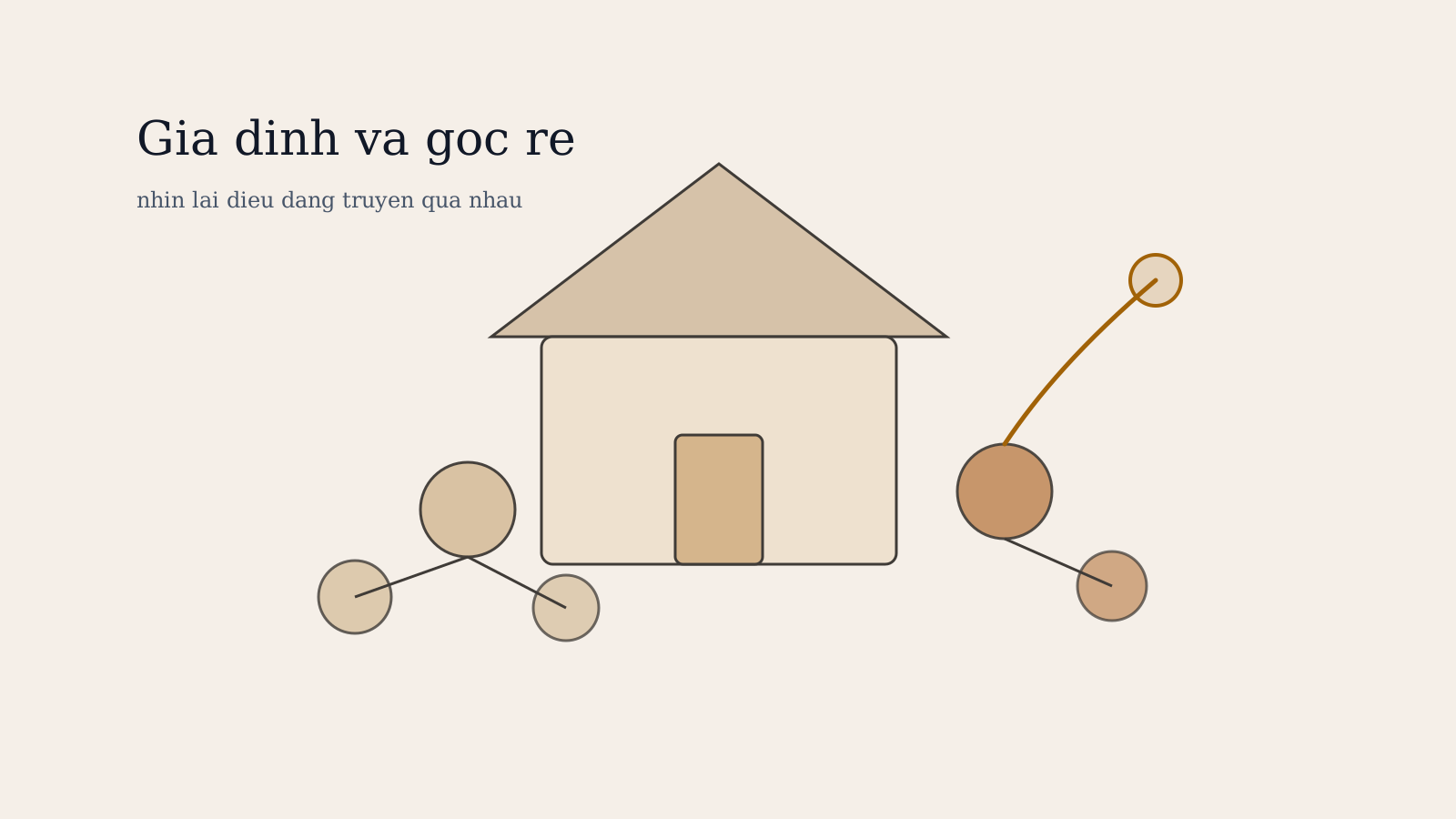
Family is not only where we grow up. It is also where many of our first life reactions are formed.
Some learn to stay quiet to keep peace. Some learn to tighten to earn approval. Some learn to sacrifice too early. Some grow older while still carrying a role that was never truly theirs.
This topic does not exist to judge family. It exists to help you see the influence, separate from old patterns, and begin choosing a more mature way to live.
Module 1 - Family is the first environment
A child usually learns love, fear, worth, and limits not through lectures, but through atmosphere.
Repeated phrases like “don't disturb anyone,” “you must do better,” “be quiet,” or “don't be weak” can become lifelong beliefs.
Module 2 - Roles and unconscious loyalty
Many adults are still living as the old child they once had to be inside their family.
- the one who carries everything
- the one who keeps the peace
- the one who must excel
- the one who must sacrifice
- the one who must stay silent
Module 3 - What gets passed through us
Not everything is passed through words. Some things move through silence, facial expressions, control, anxiety, avoidance, and the habit of enduring too much.
When you see that clearly, you are not becoming weaker. You are becoming able to stop passing it forward.
Today's practice
- Write down three phrases you heard repeatedly growing up.
- Notice which one you still live by today.
- Choose one family reaction you do not want to repeat.
Module 4 - Looking back without blame
Seeing family influence does not mean blaming the past for everything. But it also does not mean pretending the past left no mark.
Maturity means seeing what happened clearly, taking responsibility for the present, and choosing a new response with honesty.
Module 5 - Notes and professional support
Not every family conversation should be opened immediately. If safety is not there, the first task is not confrontation. The first task is steadiness.
If violence, trauma, or active risk is involved, seek the right support. This topic is a place for observation and growth, not a substitute for therapy, legal support, or healthcare when needed.